← Home
60-Second Essentials
1 / 6
01 · Simple questions

Offer simple yes/no questions.

If an athlete can't easily answer an open-ended question, ask yes/no or give two clear choices.

TRY THIS Give two clear options for the athlete to choose.
swipe ↔
Yes and No shown on opposite sides of a balance
YES or NO
02 · Words + actions

Say it + show it.

Pair short words with something the athlete can see. Your gesture can help give the words meaning.

TRY THIS Say less. Make the important part visible.
👍
“Yes.” + thumbs up
“Water?” + show bottle
“Stand here.” + point
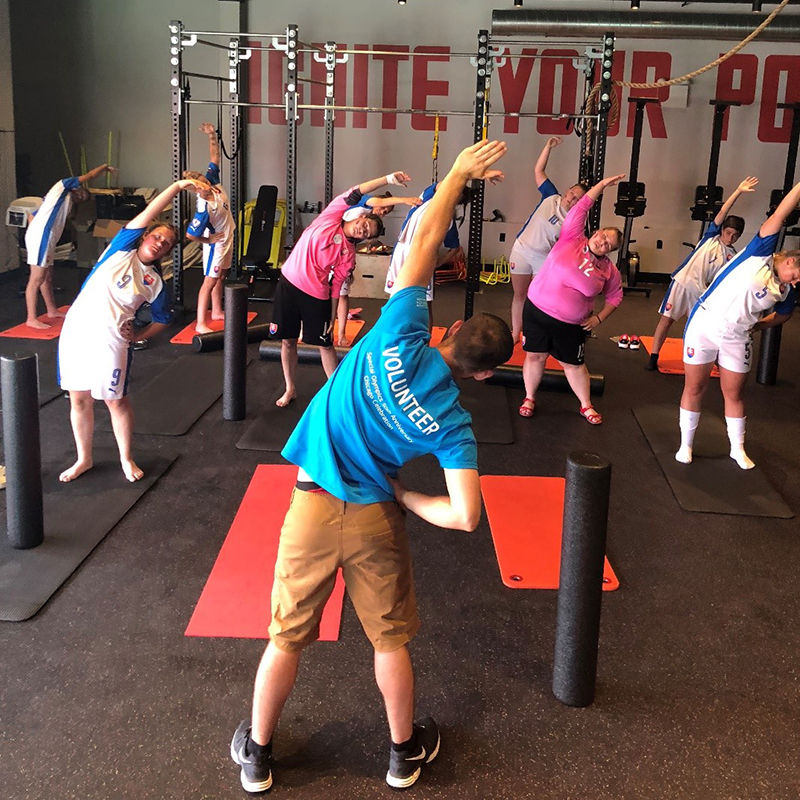
Volunteer demonstrating a movement while athletes follow along
03 · Be consistent

Use the same gesture for the same meaning.

Once a gesture means something, use it the same way every time. Consistency makes it easier to understand.

TRY THIS Use signals the athlete or program already knows whenever possible.
GOOD JOB
✋ High five
LET'S GO
✊ Fist up
WATER
Hold bottle up
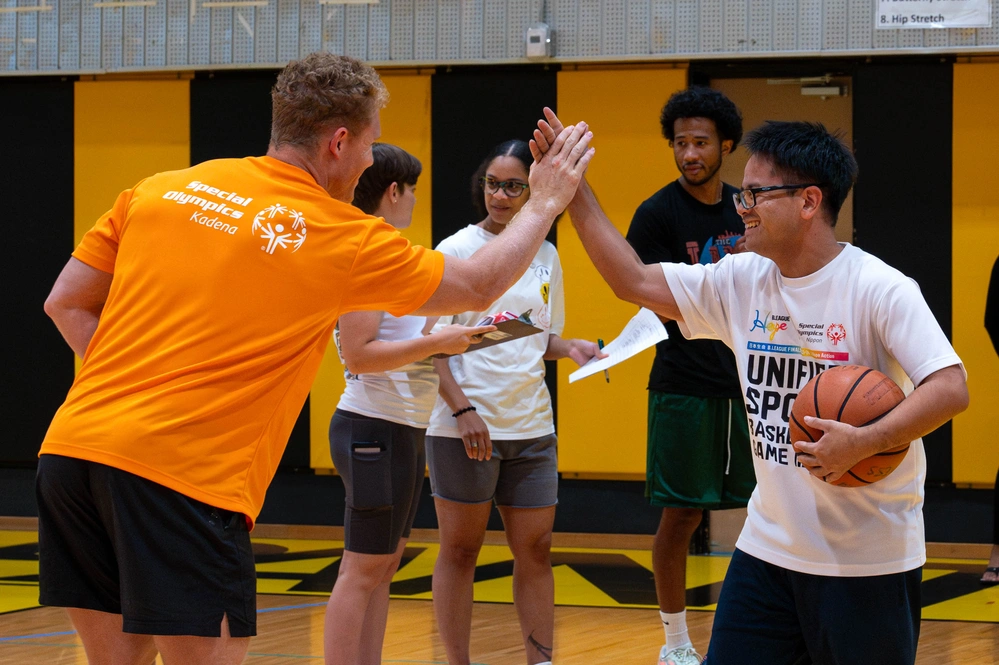
Athlete and volunteer sharing a high five
04 · Give it time

Give athletes time to react and respond.

Give one clear cue and leave time to respond. If repeating isn't helping, change your approach.

TRY THIS “Pass.” → wait → show one pass → let them try.
1
SAY
2
WAIT
3
SHOW
4
TRY
Don't just add more words.
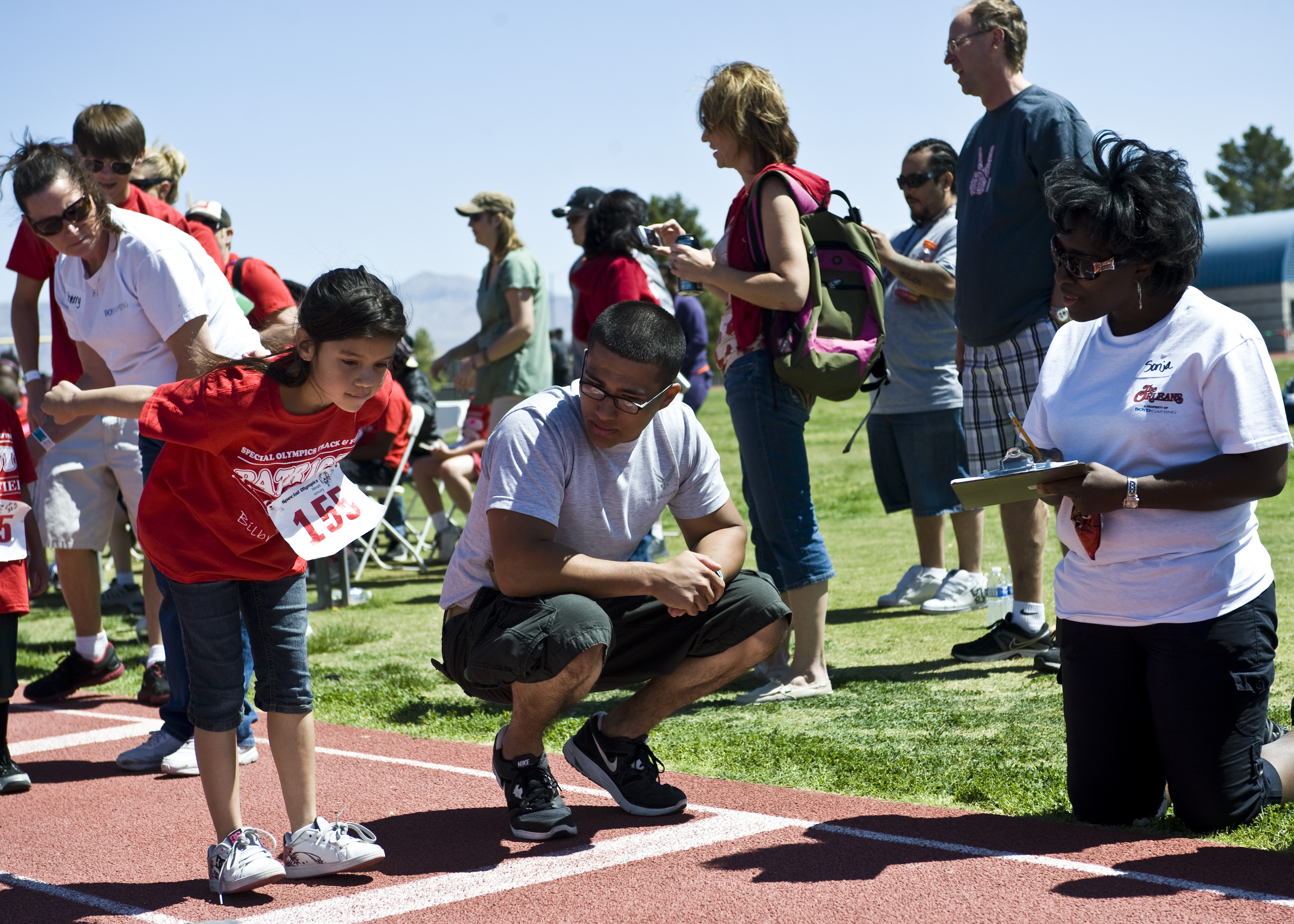
Volunteer waiting supportively beside an athlete
05 · Your energy

Always have a smile and show your good energy.

Some athletes notice facial expression and body language closely. If you look frustrated, they may think it's directed at them.

TRY THIS Smile. Encourage. Celebrate attempts. High five or fist bump if the athlete likes them.
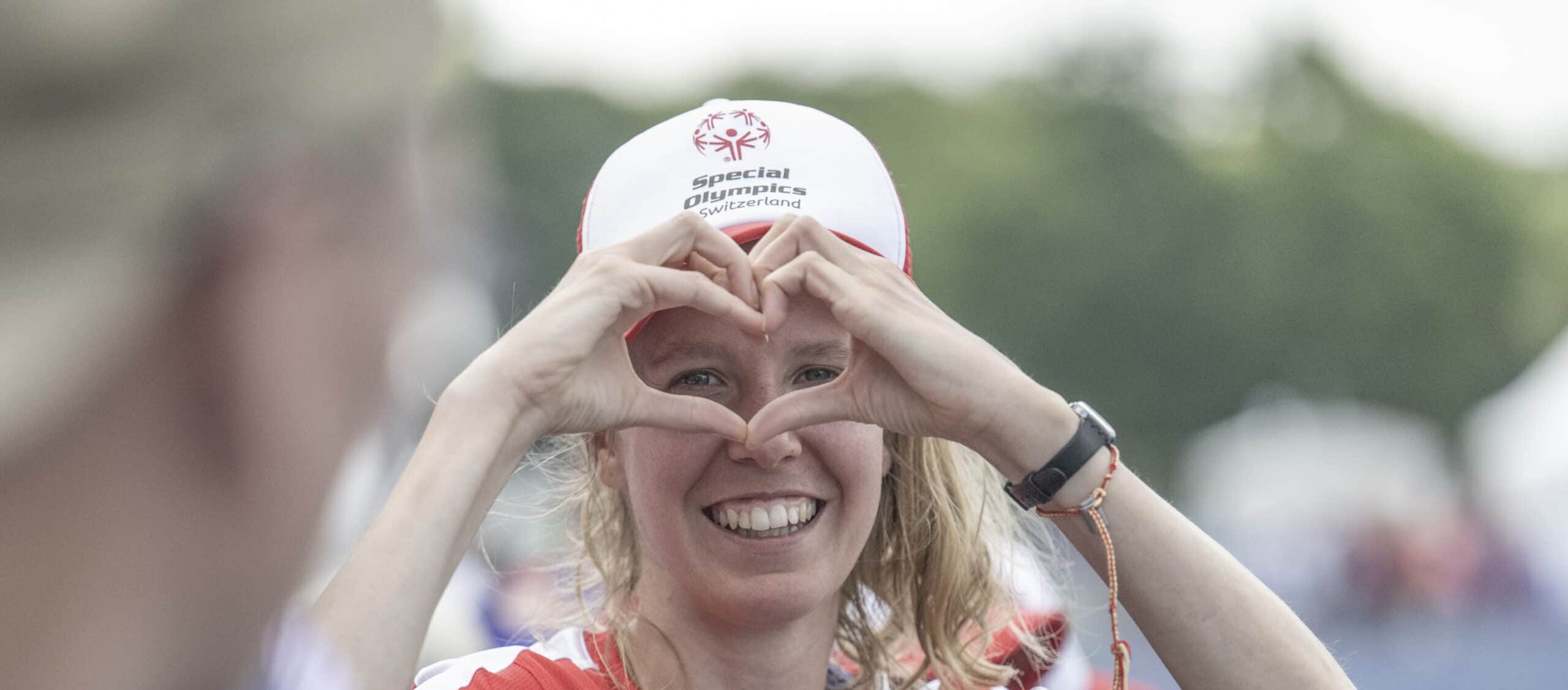
A volunteer smiling warmly
😊
😊 “Nice!”
✋ High five?
✊ “Let's go!”
06 · Read the moment

What came before can explain what you're seeing.

Jumping, yelling, walking away, or pushing away can mean different things. Check what happened just before.

TRY THIS Make what's next clear: “One more, then basketball.” “Your turn is next.”
WAITING in line
JUMPING
YOUR TURN is next
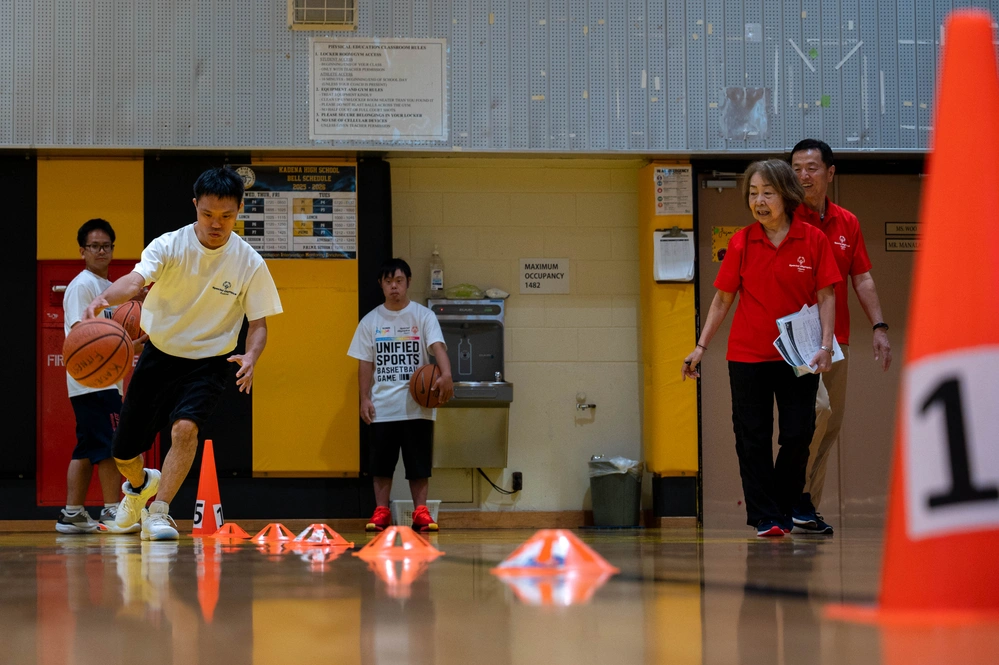
Athlete and volunteers in a busy sports environment